A 2025/2026 study evaluating multiple carotenoids in white shrimp found astaxanthin achieved the highest antioxidant-related performance, while beta-carotene contributed strongly to pigmentation and economic optimization.
Astaxanthin Powder vs Beta-Carotene in Aquaculture: Which Pigment Is Better?
Color is one of the most important commercial factors in aquaculture.
For shrimp, salmon, trout, ornamental fish, and other aquatic species, external appearance directly influences market price, consumer preference, survival quality, and brand reputation. Because aquatic animals cannot synthesize carotenoids efficiently, feed manufacturers often add natural pigment ingredients to improve coloration and physiological performance.
Among all carotenoids, astaxanthin powder and beta-carotene powder are two of the most widely discussed natural pigments.
But which one is better for aquaculture feed formulations?
The answer is more complex than simply comparing pigment intensity.
A professional aquaculture nutrition strategy must evaluate:
- Pigmentation efficiency
- Absorption and deposition
- Antioxidant activity
- Stress resistance
- Immune support
- Cost-performance ratio
- Species-specific metabolism
This article provides a comprehensive comparison of astaxanthin vs beta-carotene in aquaculture, incorporating scientific evidence, formulation experience, and practical solutions from Zenpet, a functional ingredient supplier supporting pet nutrition, animal feed, and aquaculture industries.
Why Carotenoids Matter in Aquaculture Nutrition?
Carotenoids are naturally occurring pigments responsible for yellow, orange, and red coloration in plants, algae, and aquatic organisms.
In aquaculture diets, carotenoids serve several biological functions:
Pigmentation Enhancement
Species such as:
- Atlantic salmon
- Rainbow trout
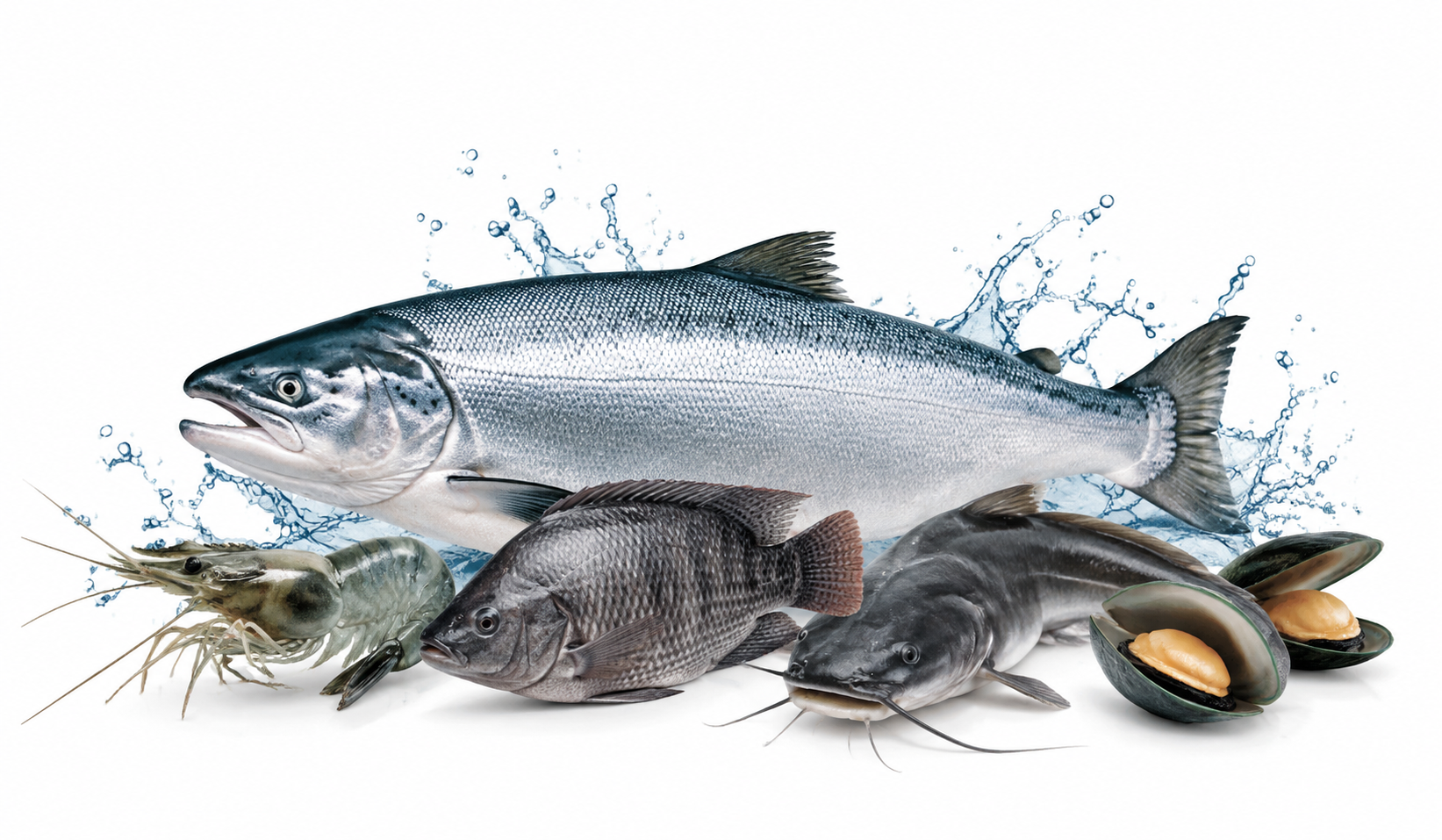
- Pacific white shrimp (Litopenaeus vannamei)
- Tiger shrimp (Penaeus monodon)
- Ornamental fish
accumulate carotenoids in:
- Skin
- Muscle tissue
- Shell
- Gonads
creating commercially desirable colors.
Antioxidant Protection
Intensive aquaculture environments expose animals to:
- High stocking density
- Temperature fluctuations
- Low oxygen conditions
- Transportation stress
- Pathogen challenges
Carotenoids help neutralize reactive oxygen species (ROS), protecting cells from oxidative damage.
Immune Function Support
Carotenoids may influence:
- Antioxidant enzyme activity
- Immune response
- Disease resistance
- Stress tolerance
Research has demonstrated that dietary astaxanthin can improve antioxidant capacity and immune-related performance in aquatic animals.
What Is Astaxanthin Powder?
Astaxanthin is a red-orange xanthophyll carotenoid belonging to the same family as lutein and zeaxanthin.
Commercial sources include:
- Haematococcus pluvialis
- Red yeast (Phaffia rhodozyma)
- Synthetic astaxanthin
Natural astaxanthin from microalgae is increasingly preferred in premium aquaculture applications.
Key Characteristics of Astaxanthin:
| Feature | Description |
|---|---|
| Chemical class | Xanthophyll carotenoid |
| Color | Red-orange |
| Lipid solubility | High |
| Aquaculture applications | Shrimp, salmon, trout, ornamental fish |
| Main benefits | Pigmentation + antioxidant protection |
| Tissue deposition | Excellent |
Why Astaxanthin Performs Well in Aquaculture?
Astaxanthin has:
- Two hydroxyl groups
- Two keto groups
- Polar molecular structure
This unique structure allows it to interact with both lipid membranes and aqueous environments.
Compared with beta-carotene, astaxanthin generally shows stronger antioxidant activity and better tissue accumulation.
What Is Beta-Carotene Powder?
Beta-carotene is one of the most common carotenoids found in plants.
Sources include:
- Algae (Dunaliella salina)
- Carrots
- Palm oil
- Marigold extracts
Beta-carotene is a precursor of vitamin A and can participate in carotenoid metabolism.
Key Characteristics of Beta-Carotene:
| Feature | Description |
|---|---|
| Chemical class | Carotene |
| Color | Orange-yellow |
| Main role | Pigmentation + vitamin A precursor |
| Cost | Usually lower than astaxanthin |
| Applications | Feed pigment, functional additive |
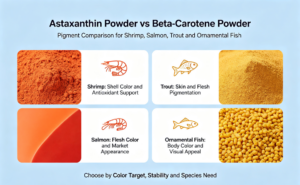
Astaxanthin Powder vs Beta-Carotene
| Parameter | Astaxanthin Powder | Beta-Carotene Powder |
|---|---|---|
| Pigmentation strength | ⭐⭐⭐⭐⭐ | ⭐⭐⭐ |
| Red coloration | Excellent | Moderate |
| Antioxidant capacity | Very high | Moderate |
| Shrimp shell coloration | Excellent | Good |
| Fish muscle pigmentation | Excellent | Limited |
| Cost efficiency | Higher cost | Lower cost |
| Premium seafood applications | Preferred | Alternative |
| Stress resistance support | Strong | Moderate |
Pigmentation Performance: Which Creates Better Color?
Winner: Astaxanthin
Astaxanthin is considered the primary pigment responsible for the red coloration of salmonids and many crustaceans.
In shrimp farming, dietary astaxanthin is efficiently deposited into tissues, producing stronger red-orange coloration compared with many other carotenoids.
For premium markets such as:
- Japanese shrimp markets
- European seafood brands
- High-value ornamental fish
astaxanthin remains the preferred solution.
However: Beta-Carotene Can Still Work
Beta-carotene is not ineffective.
Some aquatic species can convert beta-carotene into other carotenoids, including astaxanthin-related pigments.
Studies on shrimp have shown that beta-carotene supplementation can achieve acceptable coloration under certain feeding strategies.
Therefore, beta-carotene can be valuable when:
- Feed cost is a major concern
- Moderate pigmentation is acceptable
- Large-scale production requires economic optimization
Antioxidant Performance: Astaxanthin Has the Advantage
Oxidative stress is one of the biggest challenges in modern aquaculture.
Factors include:
- Intensive farming density
- Poor water quality
- Heat stress
- Oxygen fluctuations
Astaxanthin provides stronger antioxidant protection because of its molecular structure.
Research comparing astaxanthin and beta-carotene in tiger shrimp showed astaxanthin performed better as both a pigment and antioxidant additive.
| Application | Recommended Ingredient |
|---|---|
| Premium shrimp | Astaxanthin |
| Salmon/trout pigmentation | Astaxanthin |
| Ornamental fish | Astaxanthin |
| Cost-controlled shrimp feed | Beta-carotene |
| Functional antioxidant feed | Astaxanthin |
| Economic carotenoid blends | Combination strategy |
Overall winner: Astaxanthin Powder
For high-performance aquaculture, astaxanthin remains the benchmark pigment because it combines:
✓ Superior coloration
✓ Strong antioxidant activity
✓ Better tissue deposition
✓ Functional health benefits
However, beta-carotene remains a valuable ingredient when cost optimization and formulation flexibility are priorities.
The best choice depends on species, production goals, and market positioning.
How Zenpet Helps Aquaculture Companies Choose the Right Pigment Solution?
Zenpet provides functional carotenoid ingredients designed for:
Shrimp Feed Applications
Solutions for:
- Shell coloration
- Stress resistance
- Harvest quality improvement
Fish Feed Applications
Suitable for:
- Salmon
- Trout
- Ornamental fish
Supporting:
- Skin pigmentation
- Market appearance
- Nutritional value
Formulation Support
Zenpet works with:
- Aquaculture feed manufacturers
- Animal nutrition companies
- Private label brands
to develop practical pigment solutions.
Conclusion
Sourcing Astaxanthin Powder for your brand? Talk to the team that’s supplied the industry’s leading brands for over 20 years. Every Zenpet sample ships with third-party verified analysis, Evaluate it against anything on the market. Contact us today!
References
Elbahnaswy S., Elshopakey G.E. Recent progress in practical applications of a potential carotenoid astaxanthin in aquaculture industry. Fish Physiology and Biochemistry.
Comparison effect of dietary astaxanthin and β-carotene on Penaeus monodon. Aquaculture.
Pigmentation of prawn with dietary astaxanthin, β-carotene and canthaxanthin. Aquaculture.
Comprehensive evaluation of dietary carotenoids in Penaeus vannamei. Aquaculture.