


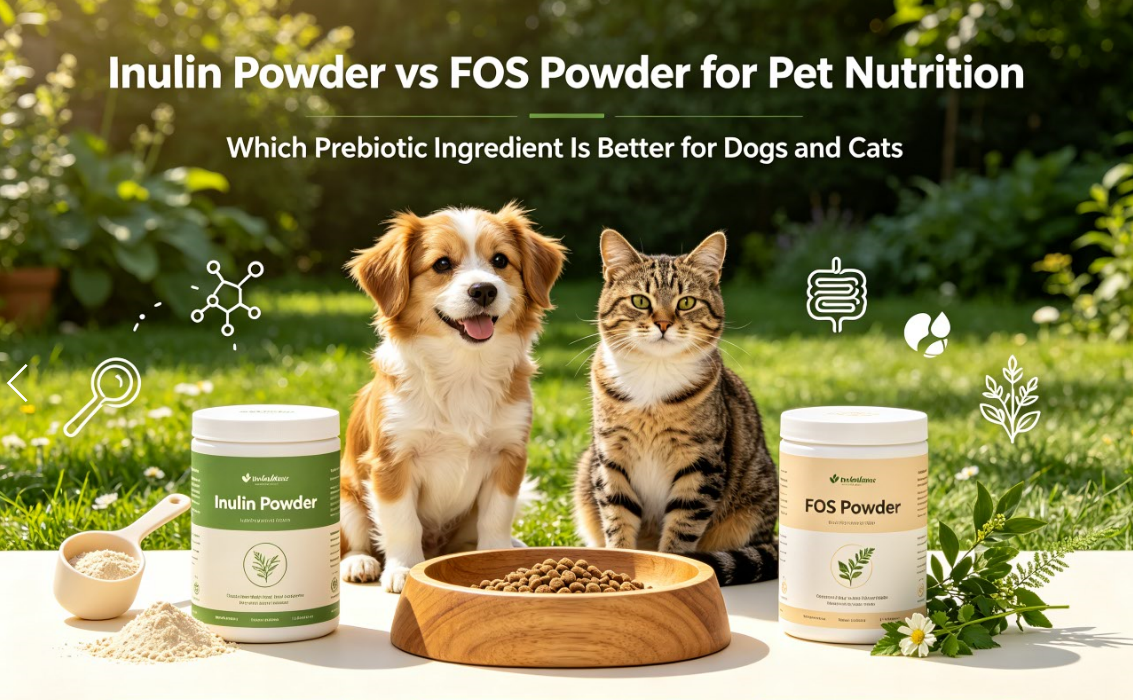
The pet nutrition industry is rapidly shifting from basic nutrition toward pet food solutions that support digestive health, immunity, healthy aging, weight management, and overall wellness.
Among the most widely used functional fibers, Inulin Powder and Fructooligosaccharides (FOS) Powder have become popular choices for dog and cat food manufacturers because of their ability to support beneficial gut bacteria and promote a healthier microbiome.
However, many pet food formulators face an important question:
Should you Choose Inulin Powder or FOS Powder for your Pet Nutrition Formula?
The answer is not simply that one ingredient is better than the other. The optimal choice depends on:
- Target animal species (dogs vs cats)
- Product format (dry food, wet food, treats, supplements)
- Desired digestive benefits
- Fermentation speed
- Dosage requirements
- Manufacturing considerations
This guide provides a science-based comparison of Inulin vs FOS for pet nutrition, helping pet food brands and R&D teams select the right prebiotic ingredient for their formulations.
As a functional pet ingredient supplier, Zenpet helps pet nutrition companies develop customized gut health solutions using premium-quality prebiotics, botanical extracts, and natural functional ingredients.
What Are Prebiotics in Pet Nutrition?
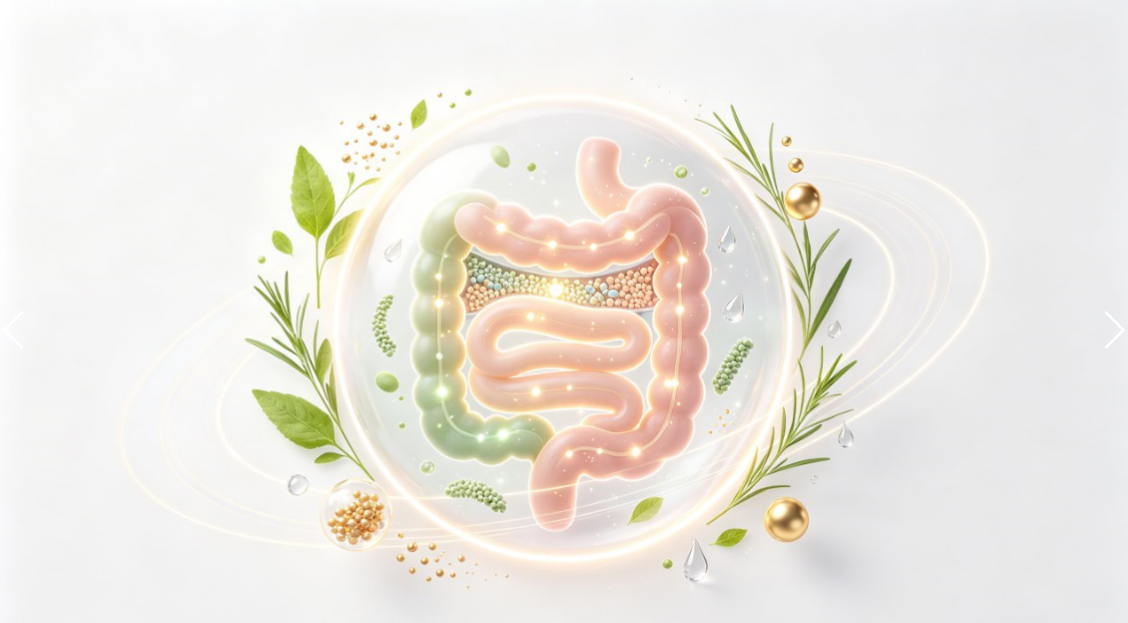
Prebiotics are specialized dietary fibers that are not digested by dogs and cats but are selectively fermented by beneficial microorganisms in the intestine.
Unlike probiotics, which introduce live microorganisms, prebiotics work by feeding and supporting existing beneficial bacteria.
In pet nutrition, prebiotics are commonly used to:
- Support balanced intestinal microbiota
- Improve stool quality
- Promote short-chain fatty acid (SCFA) production
- Support digestive function
- Reduce unpleasant fecal odor
- Enhance overall gut health
Research shows that prebiotics such as inulin and FOS can influence intestinal microbial activity, fermentation products, and digestive health in companion animals.
Inulin Powder vs FOS Powder: Understanding the Difference
Although Inulin and FOS belong to the same family of fructan-based prebiotics, their molecular structures and fermentation characteristics are different.
What Is Inulin Powder?
Bulk Inulin powder is a naturally occurring soluble dietary fiber found in plants such as:
- Chicory root
Chemically, inulin is a chain of fructose molecules connected by β-(2→1) bonds.
Because of its longer chain structure, inulin is generally fermented more slowly compared with FOS.
Key Characteristics of Inulin Powder:
| Feature | Inulin Powder |
| Ingredient type | Soluble dietary fiber |
| Source | Chicory root |
| Chain length | Longer fructan chains |
| Fermentation speed | Slow to moderate |
| Main fermentation site | Distal colon |
| Primary benefit | Long-lasting microbiome support |
| Additional function | Fiber enrichment and satiety support |
Inulin can also naturally generate FOS during fermentation, providing a broader fermentation profile.
What Is FOS Powder?
FOS (Fructooligosaccharides) are shorter chains of fructose molecules.
Commercial FOS is usually produced from:
- Chicory-derived inulin
- Sucrose enzymatic conversion
Because of its shorter chain length, FOS is fermented faster by intestinal bacteria.
Key Characteristics of FOS Powder:
| Feature | FOS Powder |
| Ingredient type | Short-chain prebiotic fiber |
| Source | Chicory, sugar-based enzymatic production |
| Chain length | Short fructooligosaccharides |
| Fermentation speed | Rapid |
| Main fermentation site | Proximal colon |
| Primary benefit | Fast microbiota stimulation |
| Common application | Digestive supplements and functional pet foods |
FOS has been widely studied for its ability to stimulate beneficial bacteria and support intestinal fermentation.
Inulin vs FOS for Dogs and Cats: Complete Comparison
| Category | Inulin Powder | FOS Powder |
| Molecular structure | Longer fructan chains | Short fructan chains |
| Fermentation speed | Slow fermentation | Rapid fermentation |
| Digestive tolerance | Generally gentler | May cause gas at high levels |
| Fiber contribution | Higher | Lower |
| Stool quality support | Excellent | Excellent |
| Microbiome modulation | Long-term support | Fast bacterial stimulation |
| Satiety support | Stronger | Moderate |
| Best application | Premium diets, functional foods | Supplements, digestive formulas |
| Cost consideration | Usually economical | Often higher cost |
Which Prebiotic Ingredient Is Better for Dogs?
Dogs are highly adaptable animals with a complex intestinal microbiome. For most dog food applications:
Inulin Advantages for Dogs
Inulin is often preferred when manufacturers want:
1. Balanced Fermentation
Because inulin ferments more gradually, it can provide a steady supply of fermentation products including short-chain fatty acids.
2. Better Stool Management
Moderate levels of inulin may help improve stool consistency by supporting healthy intestinal fermentation.
3. Weight Management Applications
Inulin provides dietary fiber with low caloric contribution, making it useful in:
- Weight control formulas
- Senior dog diets
- Satiety-support products
Research indicates prebiotic fibers may influence digestion, microbial composition, and fermentation metabolites in dogs.
FOS Advantages for Dogs
FOS may be a better option when brands want:
Rapid Gut Microbiome Support
FOS can quickly stimulate beneficial bacteria because of its shorter structure.
Common applications:
- Digestive supplements
- Probiotic + prebiotic combinations
- Gut health chews
Which Prebiotic Ingredient Is Better for Cats?
Cats are obligate carnivores, but they still possess a functional intestinal microbiome that responds to dietary fibers.
For cat nutrition products:
Inulin Benefits
- Supports controlled fermentation
- Provides gentle fiber supplementation
- Suitable for premium digestive formulas
FOS Benefits
- Provides fast fermentation
- Often combined with probiotics
- Useful in targeted digestive supplements
However, cats may have different tolerance levels compared with dogs, meaning dosage optimization is essential.
Studies evaluating FOS and inulin supplementation in dogs and cats show that individual microbiome responses can vary significantly between animals.
Inulin or FOS: Which One Should Pet Food Manufacturers Choose?
There is no universal winner.
The best ingredient depends on your formulation objective.
Choose Inulin Powder When You Need:
✔ Premium digestive health positioning
✔ Long-lasting fermentation support
✔ Fiber enrichment
✔ Weight management formulas
✔ Senior pet nutrition products
Choose FOS Powder When You Need:
✔ Fast prebiotic activity
✔ Combination with probiotics
✔ Digestive supplement formulas
✔ Small-dose functional ingredients
Use Both Together for Advanced Pet Nutrition
Many innovative pet nutrition formulas combine Inulin + FOS because they provide complementary fermentation profiles:
- FOS → rapid bacterial utilization
- Inulin → sustained fermentation
This combination can create a more comprehensive microbiome-support approach.
Formulation Considerations for Pet Food Manufacturers
Selecting the correct prebiotic ingredient requires more than choosing the ingredient name.
Professional formulation should consider:
1. Dosage Optimization
Too much fermentable fiber may lead to:
- Gas production
- Loose stool
- Reduced palatability
Ingredient inclusion levels should be evaluated according to:
- Animal size
- Life stage
- Complete diet composition
2. Particle Size and Processing Stability
For pet food production, manufacturers should evaluate:
- Powder flowability
- Heat stability
- Moisture content
- Compatibility with extrusion processes
3. Combination With Other Functional Ingredients
Modern pet health formulas often combine prebiotics with:
- Probiotics
- Postbiotics
- Digestive enzymes
- Beta-glucans
- Mushroom extracts
- Botanical antioxidants
A multi-functional approach can create stronger product differentiation.
Why Choose Zenpet for Inulin and FOS Pet Nutrition Solutions?
Choosing a prebiotic ingredient supplier is not only about purchasing powder.
Pet food brands need:
- Reliable quality
- Consistent specifications
- Application support
- Documentation
- Formulation expertise
Zenpet Provides:
Premium-Quality Prebiotic Ingredients
Zenpet supplies functional pet nutrition ingredients designed for:
- Dog food manufacturers
- Cat food brands
- Pet supplement companies
- Veterinary nutrition companies
Quality Control & Documentation
Available support includes:
- COA documentation
- Specification sheets
- Microbial testing
- Heavy metal analysis
- Stability information
Customized Pet Formula Solutions
Zenpet works with brands to develop solutions for:
- Digestive health
- Gut microbiome support
- Immune nutrition
- Healthy aging
- Functional treats
Instead of simply supplying Inulin or FOS powder, Zenpet focuses on helping customers create commercially successful pet nutrition products.
How to Select the Right Prebiotic Supplier?
Before choosing an ingredient partner, pet brands should evaluate:
Ingredient Quality
Questions to ask:
- Is the botanical source clearly identified?
- Is purity verified?
- Are contaminants controlled?
Manufacturing Capability
Important factors:
- GMP production
- Batch consistency
- Traceability
- Export experience
Technical Support
A strong supplier should provide:
- Dosage recommendations
- Formulation guidance
- Market application knowledge
Conclusion
Sourcing Inulin Powder for your brand? Talk to the team that’s supplied the industry’s leading brands for over 20 years. Every Zenpet sample ships with third-party verified analysis, Evaluate it against anything on the market. Contact us today!
Frequently Asked Questions (FAQ)
1. Is Inulin safe for dogs and cats?
Yes. Inulin is commonly used as a functional fiber in pet nutrition. However, dosage should be carefully optimized because excessive fermentable fiber may cause digestive discomfort.
2. Is FOS better than Inulin for pet gut health?
Not necessarily. FOS provides faster fermentation, while inulin provides slower and more sustained fermentation. The best choice depends on the product goal.
3. Can Inulin and FOS be used together in pet supplements?
Yes. Many advanced digestive formulas combine both ingredients to provide different fermentation speeds.
4. What is the difference between probiotics and prebiotics?
Probiotics are beneficial microorganisms. Prebiotics are fibers that support beneficial microorganisms already present in the gut.
5. Which prebiotic is better for senior dogs?
Inulin is often considered suitable for senior pet formulas because it provides fiber support and slower fermentation.
6. Can FOS cause gas in pets?
High levels of rapidly fermented fibers like FOS may increase gas production in some animals. Proper dosage is important.
References
1.Flickinger EA, Van Loo J, Fahey GC. Nutritional responses to the presence of inulin and oligofructose in the diets of domesticated animals. Critical Reviews in Food Science and Nutrition.
2.Garcia-Mazcorro JF et al. Molecular assessment of fecal microbiota in healthy cats and dogs before and during supplementation with FOS and inulin. PeerJ.
3.Roberfroid MB. Prebiotics and probiotics: concepts and definitions.
4.Swanson KS et al. Petfood applications of inulin and oligofructose. Journal of Nutrition.
5.Animal Science Review: Use of biotics in animals: impact on nutrition, health, and food production.