

The pet food industry is rapidly moving beyond basic nutrition toward functional pet foods designed to support specific health goals, including healthy aging, immune function, digestive balance, urinary wellness, and antioxidant protection.
Inspired by human nutrition trends, pet food manufacturers are increasingly incorporating natural plant-based ingredients such as berries, mushrooms, botanical extracts, and polyphenol-rich superfoods into premium pet diets.
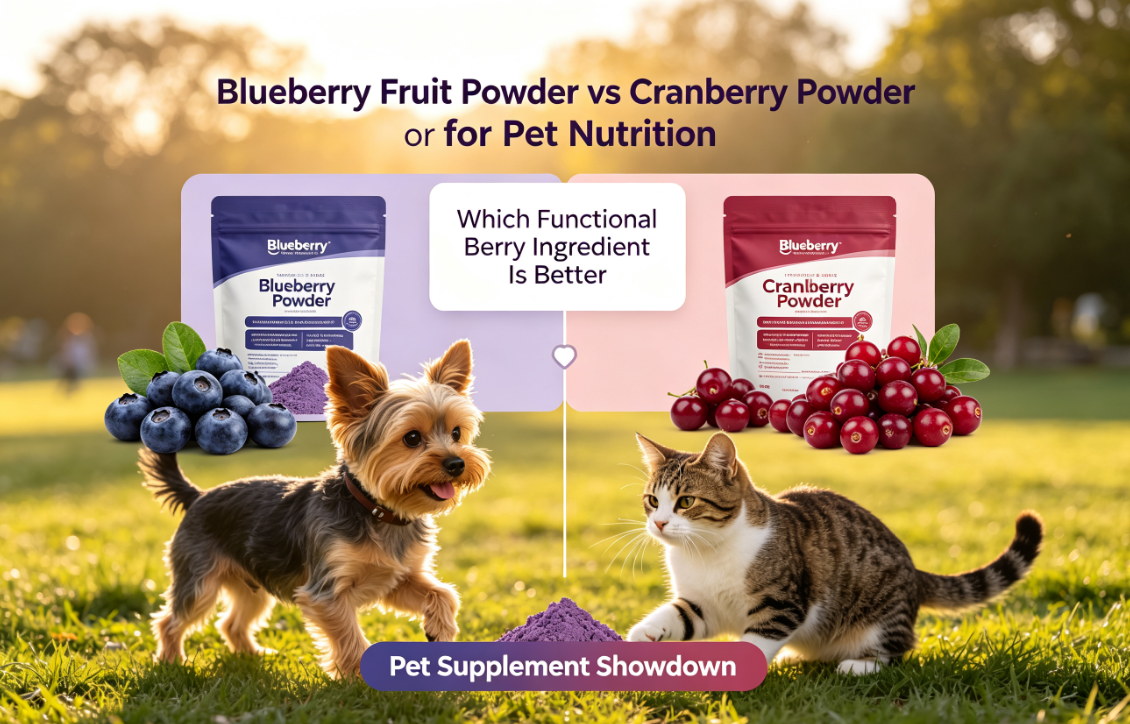
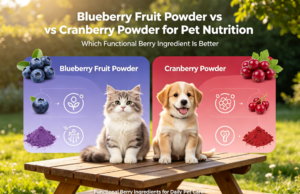
Among these functional ingredients, blueberry fruit powder and cranberry powder have become two of the most popular berry-based ingredients used in pet supplements, functional treats, toppers, and complete nutrition formulas.
Both ingredients offer valuable bioactive compounds, but they are not interchangeable.
The better choice depends on:
- Target health benefit
- Active compound profile
- Formula positioning
- Species requirements
- Dosage strategy
- Processing method
This article provides a science-based comparison of blueberry fruit powder vs cranberry powder for pet nutrition and explains how manufacturers can select the right berry ingredient for functional pet food development.
Blueberry Fruit Powder and Cranberry Powder: Botanical Overview
Blueberry Fruit Powder
Blueberry fruit powder is produced from:
Botanical Source:
Vaccinium spp.
Common varieties include:
- Vaccinium corymbosum (Highbush blueberry)
- Vaccinium angustifolium (Wild blueberry)
Blueberries are naturally rich in:
- Anthocyanins
- Flavonoids
- Polyphenols
- Vitamin C
- Dietary fiber
These compounds make blueberry powder attractive for pet formulas focused on:
- Healthy aging
- Cognitive support
- Immune health
- Antioxidant protection
Research has shown that blueberries contain polyphenolic compounds associated with antioxidant activity and cellular protection. However, the actual functional effect depends greatly on inclusion level, processing, and bioactive concentration.
Cranberry Powder
Cranberry powder is produced mainly from:
Botanical Source:
Vaccinium macrocarpon
Cranberries are especially recognized for their:
- Proanthocyanidins (PACs)
- Anthocyanins
- Organic acids
- Polyphenols
- Natural fiber
Cranberry ingredients are commonly selected for:
- Urinary tract support formulas
- Natural antioxidant blends
- Digestive health concepts
- Functional supplements
Scientific research has investigated cranberry-derived ingredients in animal nutrition, particularly-regarding bioactive compounds and urinary health-related applications.
Blueberry Powder vs Cranberry Powder: Nutritional Comparison
| Feature | Blueberry Fruit Powder | Cranberry Powder |
| Botanical source | Vaccinium spp. | Vaccinium macrocarpon |
| Primary compounds | Anthocyanins, flavonoids, polyphenols | PACs, anthocyanins, organic acids |
| Natural color | Purple-blue | Red-purple |
| Flavor profile | Mild sweet berry | Tart, acidic berry |
| Common pet applications | Senior nutrition, antioxidant formulas | Urinary support, functional blends |
| Formula positioning | Premium superfood ingredient | Targeted wellness ingredient |
Blueberry Powder for Pet Nutrition
Antioxidant Support and Healthy Aging
Blueberries are widely recognized as a natural source of anthocyanins.
Anthocyanins are plant pigments responsible for blueberry deep blue-purple color and are studied for their antioxidant properties.
For pet food brands developing:
- Senior dog formulas
- Longevity supplements
- Brain health products
- Premium wellness treats
Blueberry powder provides a strong “superfood” positioning.
Typical product concepts include:
- Senior dog antioxidant blends
- Healthy aging chews
- Functional meal toppers
Cognitive Health Positioning
The pet industry is seeing increasing demand for ingredients supporting:
- Aging pets
- Cognitive function
- Mental alertness
Blueberry polyphenols make it attractive for cognitive wellness formulations when combined with other functional ingredients such as:
- Lion’s Mane mushroom
- Omega-3 fatty acids
- Phosphatidylserine
- Vitamin E
Cranberry Powder for Pet Nutrition
Urinary Health Applications
Cranberry is one of the most recognized berry ingredients for urinary-focused pet supplements.
Its key compounds include:
- Proanthocyanidins (PACs)
- Polyphenols
Cranberry-based formulas are frequently positioned for:
- Urinary tract wellness
- Bladder support products
- Functional supplements
Commercial pet supplements commonly combine cranberry with blueberry or vitamin C to create targeted urinary wellness products.
Digestive and Microbiome Applications
Berry fibers and polyphenols may influence gut microbial activity.
Research examining berry powders has explored interactions between berry-derived compounds, fiber fractions, and microbiota-related outcomes.
This creates opportunities for cranberry powder in:
- Digestive support formulas
- Fiber blends
- Gut health supplements
Which Berry Ingredient Is Better for Pet Food Manufacturers?
The answer depends on the product goal.
Choose Blueberry Fruit Powder When Your Formula Focuses On:
Healthy Aging
Recommended products:
- Senior dog supplements
- Longevity chews
- Antioxidant powders
Key marketing positioning:
“Rich in natural anthocyanins and plant polyphenols.”
Premium Superfood Positioning
Blueberry has strong consumer recognition.
It works well for:
- Premium treats
- Natural pet supplements
- Humanization-inspired pet products
Choose Cranberry Powder When Your Formula Focuses On:
Urinary Wellness
Recommended products:
- Urinary support supplements
- Cat urinary formulas
- Functional treats
Key positioning:
“Natural berry ingredient traditionally selected for urinary wellness formulas.”
Multi-Berry Functional Blends
Cranberry combines well with:
- Blueberry
- Raspberry
- Pomegranate
- Rosemary extract
- Mushroom extracts
Can Blueberry and Cranberry Powder Be Used Together?
Yes. Many premium pet nutrition formulas use berry combinations because each ingredient contributes different functional characteristics.
A combination formula may provide:
Blueberry:
- Anthocyanins
- Polyphenols
- Superfood positioning
Cranberry:
- PAC compounds
- Tart berry profile
- Urinary wellness positioning
Example formulation concepts:
| Product Type | Berry Combination |
| Senior dog supplement | Blueberry + Cranberry + Lion’s Mane Mushroom Powder |
| Antioxidant chew | Blueberry + Rosemary Extract |
| Urinary supplement | Cranberry + Blueberry + Vitamin C |
| Functional topper | Mixed berry powder blend |
Why Ingredient Quality Determines Performance?
Not all berry powders provide the same nutritional value.
Pet food manufacturers should evaluate:
Raw Material Quality
Important factors:
- Botanical identification
- Growing region
- Harvest conditions
- Pesticide testing
Processing Technology
Different technologies influence:
- Polyphenol retention
- Color stability
- Flavor profile
- Nutrient preservation
Common processing methods include:
- Freeze drying
- Low-temperature drying
- Spray drying
- Concentration extraction
Testing Standards
A reliable berry ingredient supplier should provide:
- COA
- Microbial testing
- Heavy metal analysis
- Pesticide residue testing
- Active compound analysis
Why Choose Zenpet as Your Functional Berry Ingredient Partner?
Selecting the right berry ingredient is not only about purchasing powder.
Pet food manufacturers need a partner who understands:
- Ingredient functionality
- Formula development
- Manufacturing requirements
- Global pet nutrition trends
Zenpet: Functional Ingredient Solutions for Pet Nutrition Brands
Zenpet provides natural functional ingredients designed for:
- Pet food manufacturers
- Pet supplement brands
- Veterinary nutrition companies
- Private label pet brands
Our berry ingredient solutions include:
- Blueberry Fruit Powder
- Cranberry Powder
- Botanical extracts
- Natural antioxidants
- Functional plant ingredients
Zenpet Manufacturing Advantages
1. Quality-Controlled Raw Materials
We focus on:
- Botanical authenticity
- Supplier qualification
- Batch consistency
2. Pet Nutrition Application Experience
Instead of only supplying ingredients, Zenpet helps customers evaluate:
- Suitable inclusion rates
- Formula compatibility
- Product positioning
3. Customized Solutions
Available options include:
- Standard berry powders
- Customized particle sizes
- Functional blends
- Private formulation support
Blueberry Powder vs Cranberry Powder: Final Decision Guide
| Customer Goal | Better Choice |
| Senior pet nutrition | Blueberry |
| Antioxidant formula | Blueberry |
| Premium superfood positioning | Blueberry |
| Urinary wellness supplement | Cranberry |
| Cat urinary products | Cranberry |
| Berry combination formula | Both |
The best functional berry ingredient is not always the one with the highest popularity.
The correct choice depends on:
- Formula objectives
- Target animal
- Dosage strategy
- Product claims
- Market positioning
Conclusion
For pet food manufacturers, the strongest approach is not choosing one ingredient universally, but selecting the berry ingredient that matches the nutritional objective.
With botanical expertise, quality control, and formulation support, Zenpet helps pet nutrition brands develop next-generation functional products powered by natural berry ingredients. Contact us today!
Frequently Asked Questions (FAQ)
1. Is blueberry powder safe for dogs?
Blueberry fruit powder is commonly used as a functional ingredient in dog nutrition products. Manufacturers should determine appropriate inclusion levels based on the complete formula.
2. Is cranberry powder good for pet supplements?
Cranberry powder is widely used in pet supplements, especially formulas targeting urinary wellness and antioxidant support.
3. Can cats consume blueberry and cranberry ingredients?
Many pet products contain berry ingredients for cats, but formulation should consider feline nutritional requirements, dosage, and product purpose.
4. What is the difference between cranberry powder and cranberry extract?
Cranberry powder contains the whole dried fruit components, while cranberry extract is typically concentrated for specific compounds such as proanthocyanidins.
5. What testing should pet food manufacturers request from berry suppliers?
Manufacturers should request:
- Certificate of Analysis (COA)
- Heavy metal testing
- Microbial testing
- Pesticide analysis
- Identity testing
References
EFSA Journal. Safety and efficacy evaluation of cranberry extract from Vaccinium macrocarpon for dogs and cats. 2026.
Journal of Animal Science. Polyphenol analysis of commercial pet foods containing blueberries.
Cranberry: A Promising Natural Product for Animal Health and Performance. PMC Review.
Berry Polyphenols and Fibers Modulate Microbial Metabolic Functions. PMC.